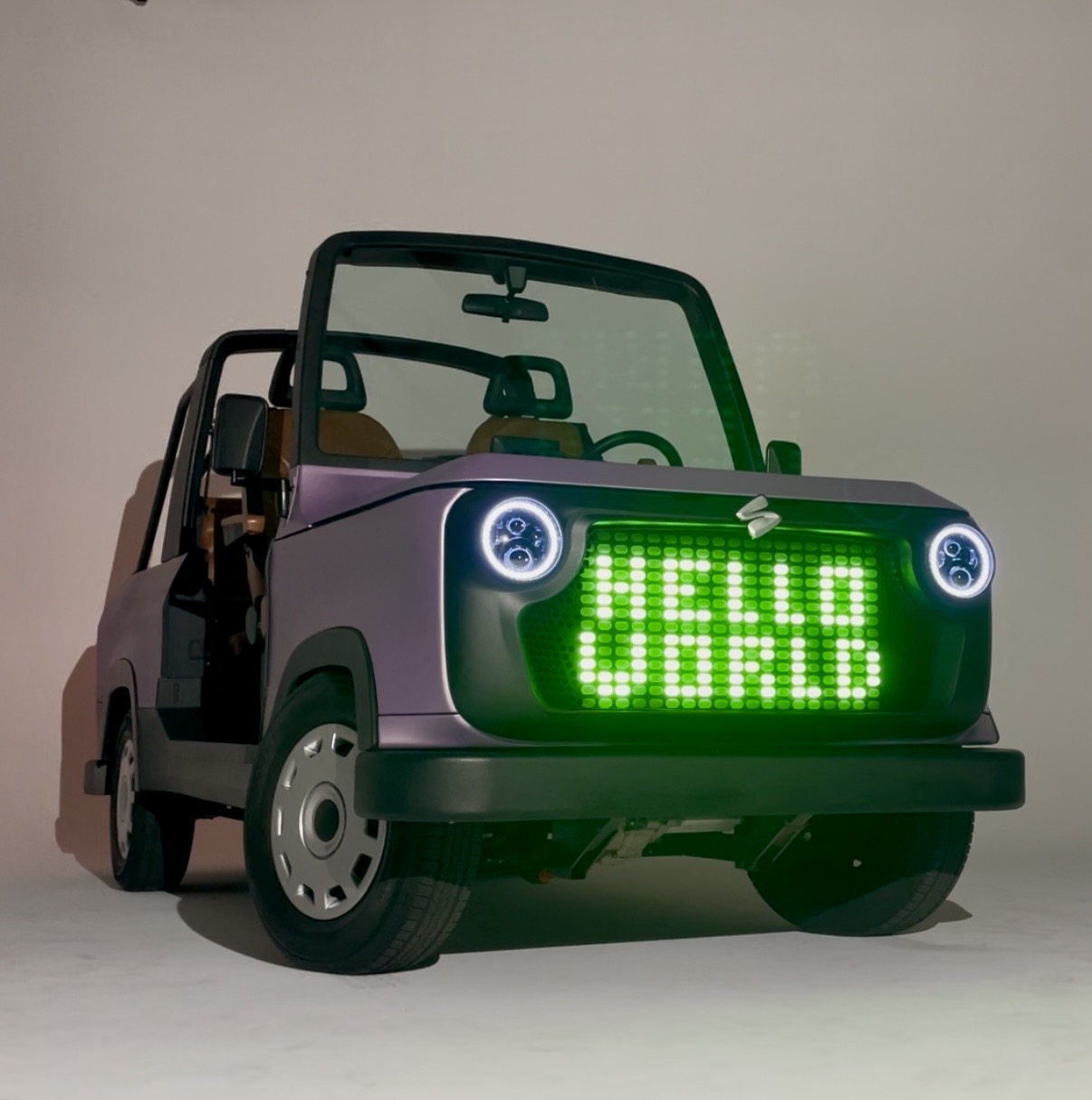
Why a friendly face
A vehicle that expresses itself like a character
Most vehicles communicate through form, material, and performance. They look fast, expensive, or aggressive. Chip wanted to try something else.
A LUV is small. It's light. It shares the road with pedestrians, cyclists, kids, and other drivers. The way it presents itself matters — not just to the person inside, but to everyone around it.
What if a vehicle could express itself like a character?
The goal was never to look futuristic. It was to give the vehicle a presence people could connect with right away — a bit of charm, a bit of attitude, and a clear signal that this is a friendly machine, not a threatening one.
For a vehicle whose whole brand is approachable mobility, that kind of expression isn't decoration. It's part of how the product earns trust on the street.
Where the work started
Prototyping personality on a niche launch
The expression system was first developed for the early product, a low-volume, high-margin lifestyle vehicle aimed at neighborhood cruising. That was the right place to start. A small, expressive launch product gave the brand room to define its personality before scaling into utility, fleet, and shared use.
The same DNA carries forward. A friendly face on a leisure cruiser is a nice-to-have. A friendly face on a LUV that delivers your groceries, shares the bike lane with you, or shows up as part of a fleet at your apartment — that's how a city-scale machine earns a place in everyday life.
So this case is about the personality system itself. The audience may shift from early adopters to everyone, but the design problem is the same: how does a vehicle feel friendly?
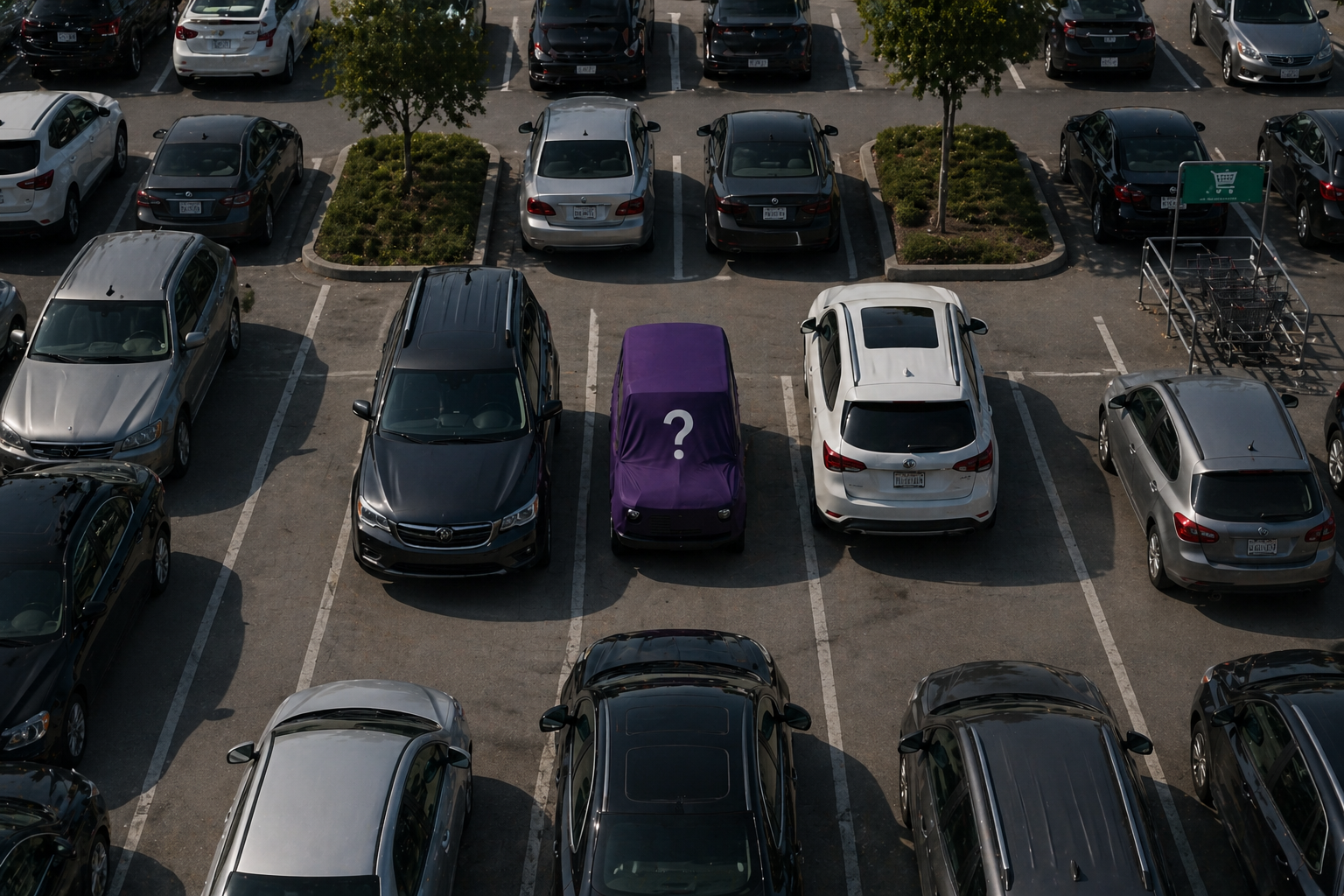
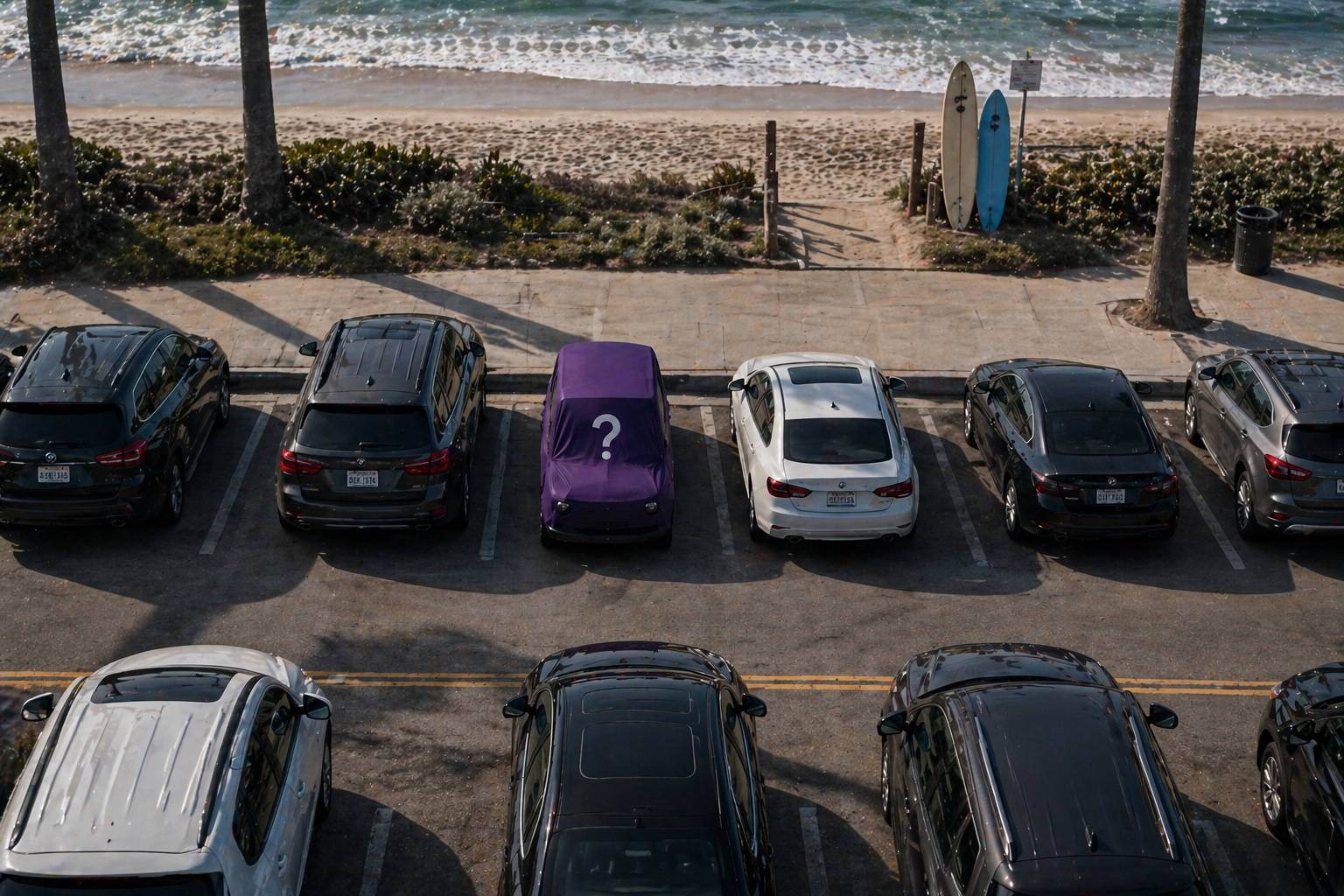
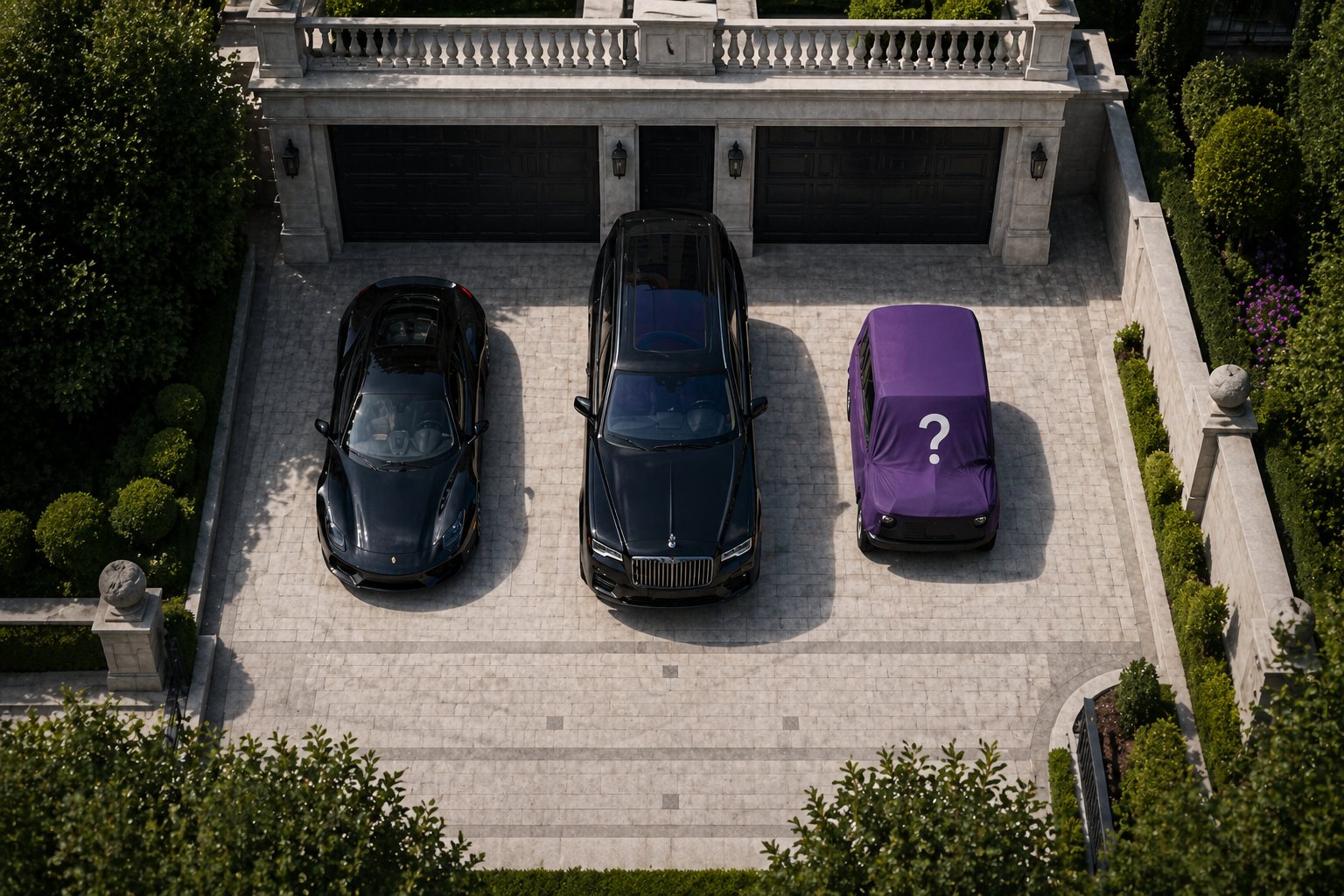
Design Challenge
Memorable without becoming gimmicky
The face had to do a lot of jobs at once. It needed to brand the vehicle, build an emotional connection, invite social moments, and still run reliably on a low-resolution LED grid in real time.
It also had to scale. What works as charm on one expressive launch vehicle has to still feel right when it's a fleet of LUVs cruising a neighborhood at 25 mph.
The direction didn't come from a single brief. It came out of a cross-functional conversation between the CEO, visual design, engineering, and me. Each of us pulled toward a different center of gravity until something shared started to land.

“”
How do you design believable personality through pixels, timing, and behavior?
My Contribution
The face as expressive interface
I led the LED face as an expressive interface, not a styling element.
That meant defining the visual and motion language, prototyping expressions, idle states, and speaking behavior, and building the real-time animation pipeline behind it all.
It also reached into how voice and AI behavior could feed back into the face, shaping the front of the vehicle into its emotional interface — the part of the LUV that actually says hello.
Expression System
A machine character with its own emotional vocabulary
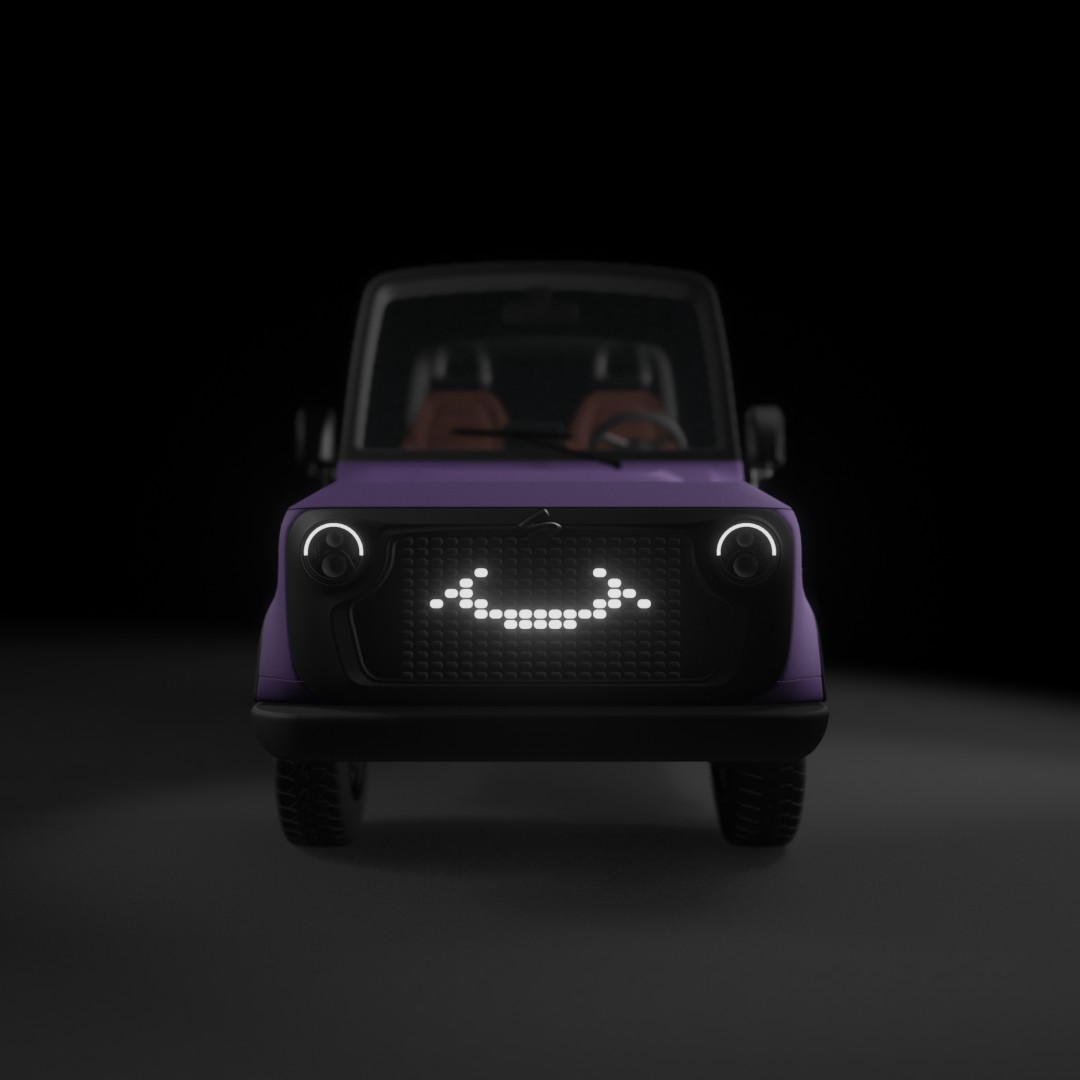
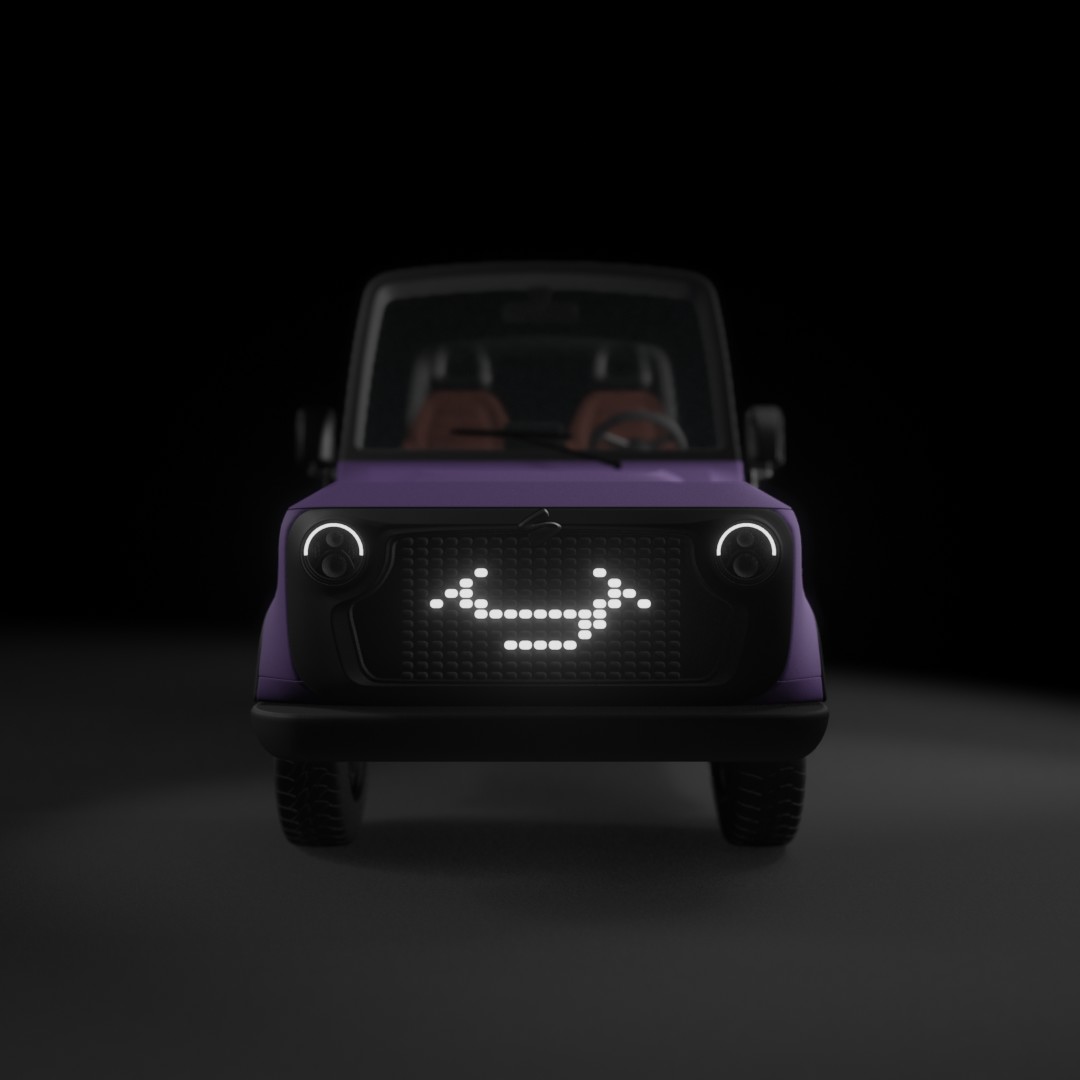
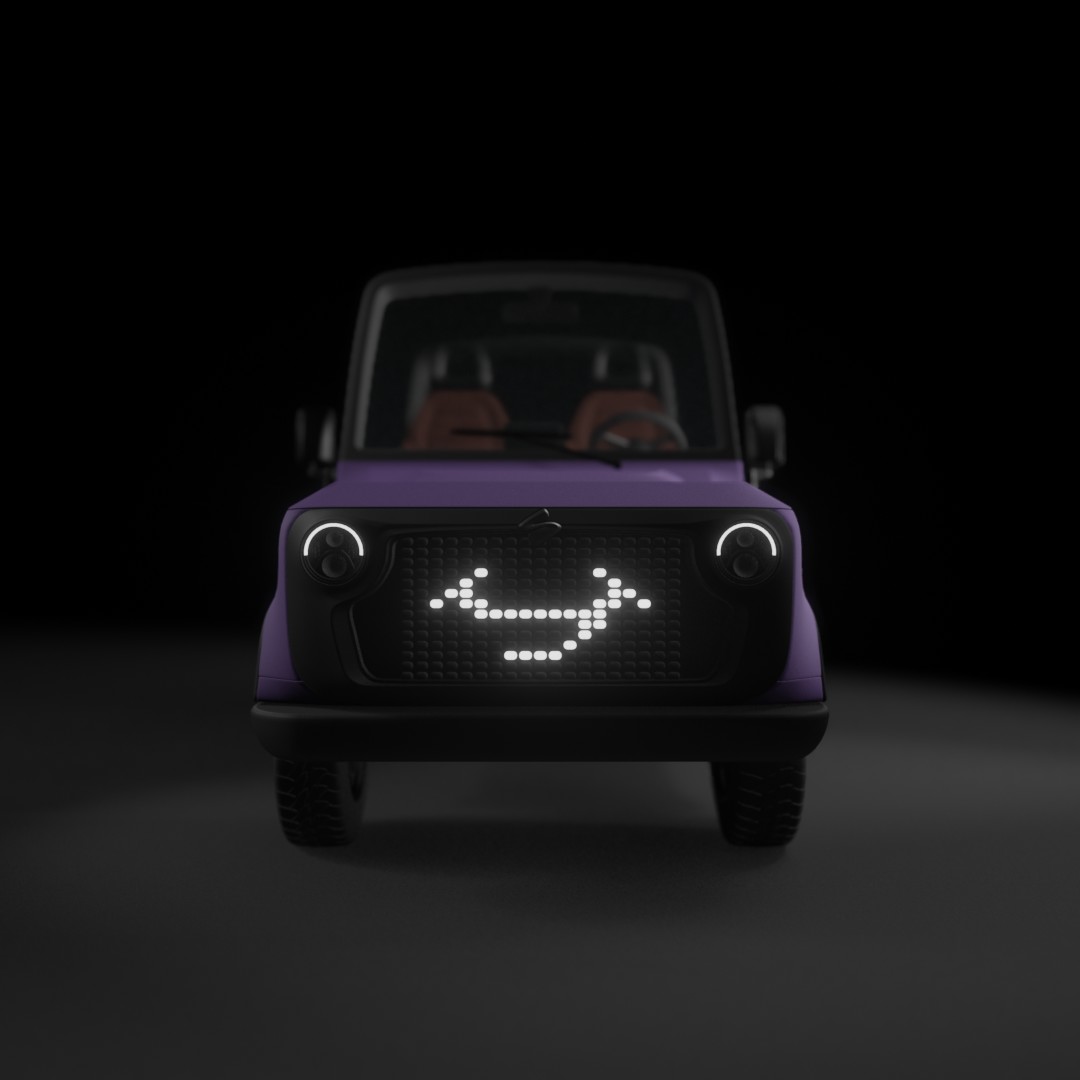
The face is a lightweight behavior system. The personality doesn't come from detail. It comes from simple pixel shapes, readable silhouettes, and motion timing that's been tuned by hand.
The point was never to put a human face on a car. It was to give the vehicle its own way of expressing itself — a small machine character built from two working layers: presence and voice (alive when quiet, expressive when speaking) and emotional states (a small attitude in every state).
Presence & Voice — alive when quiet, expressive when speaking
When the vehicle isn't talking or reacting, it still needs to feel alive. Quiet blinks, soft breathing motion, small shifts in the eyes. Just enough to keep the face from feeling like a frozen graphic. The goal is presence without performance — not lifeless, not noisy.
When it does speak, that same logic carries over. Instead of literal lip sync, the mouth is treated as character behavior, shaped by rhythm, energy, and pause. The vehicle shouldn't feel like a screen playing a talking head. It should feel like a machine character speaking in its own visual language — and that same layer is what later voice and AI behavior plug into.
Emotional States — a small attitude in every state
A small set of states gives the vehicle a readable mood: neutral, happy, curious, surprised, sleepy, playful. None of them rely on detailed faces. They all come from a few simple variables.
Each state runs on a frame sequence plus a timing curve. The curve decides when each frame shows up, how long it sits there, and how the transition feels. A handful of static frames becomes a tiny performance. Try mixing a face with a curve below and feel how the timing changes everything.
Work in Progress
Two threads still in flight
Unity → Vehicle — a roadshow puppeteer rig
A live puppeteer tool for roadshows. The operator drives the face in Unity; frames stream over WebRTC to a Linux client on the vehicle, which feeds the LED matrix through WLED. One scene, one signal path — whatever moves in Unity shows up on the LUV the next frame.
iOS Controller — pocket-sized companion
A small iOS app that hands the face over to event guests. The features are intentionally silly — trigger an expression, set off a one-shot, poke at the car and watch it react — so “friendly machine” lands as something you feel in your hands, not a tagline.
FaceTime Agent — call your car
A digital twin of the vehicle rendered in Unity, hooked up to pick up FaceTime as the car’s face. An agent on Gemini Live handles the conversation. you call your car, the twin appears on screen, and you can just talk to it.