A compact, AI-powered robotaxi designed for San Francisco.
It anticipates your needs, enhances lifestyle efficiency, and seamlessly connects you with the city.
Ideation
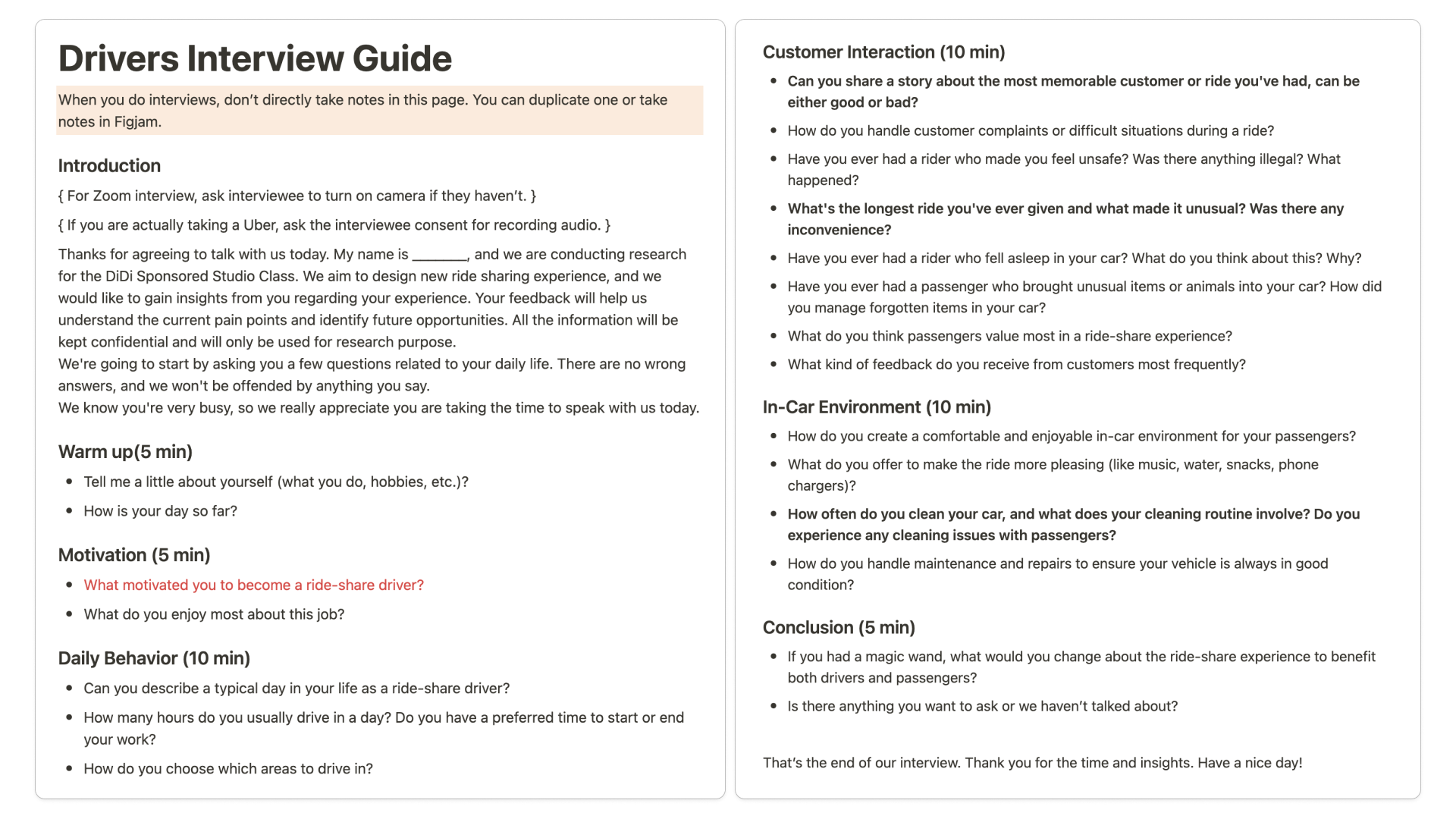
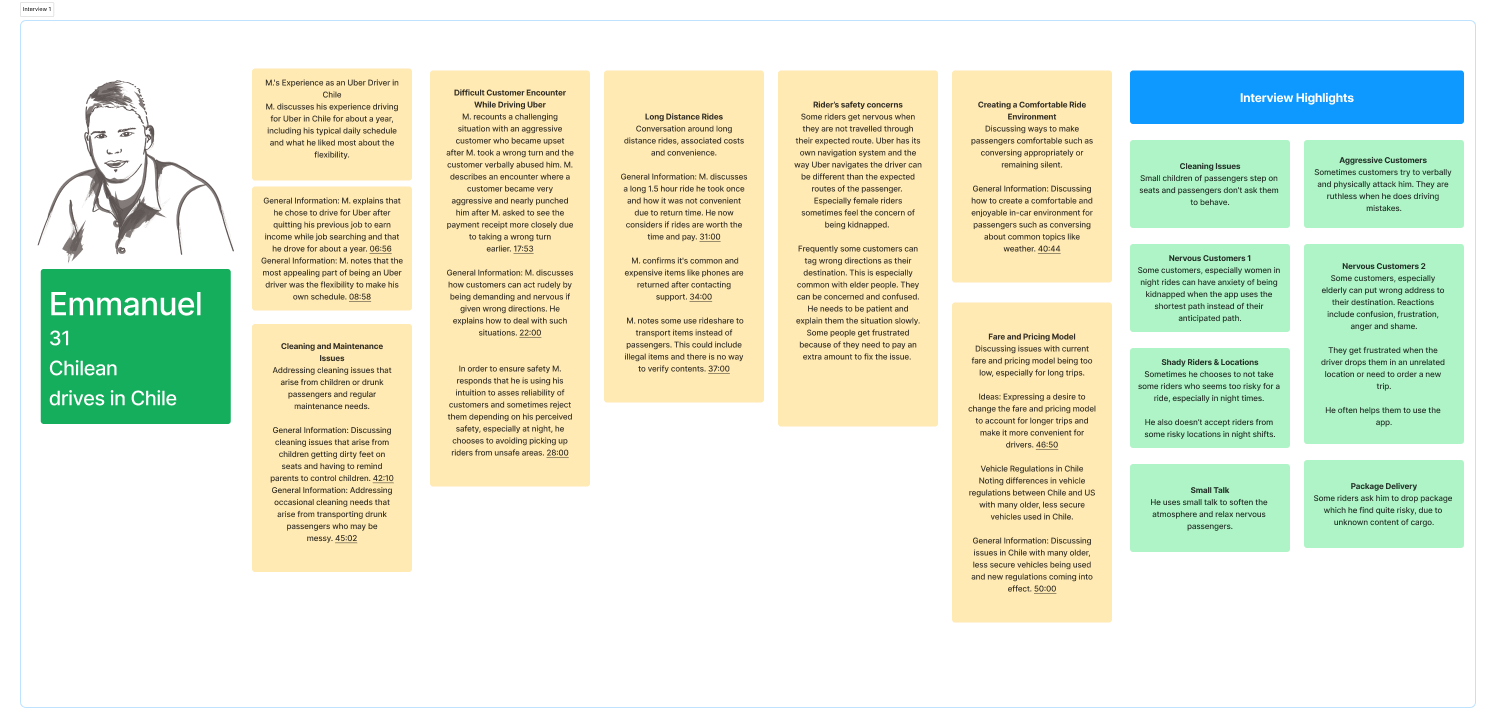
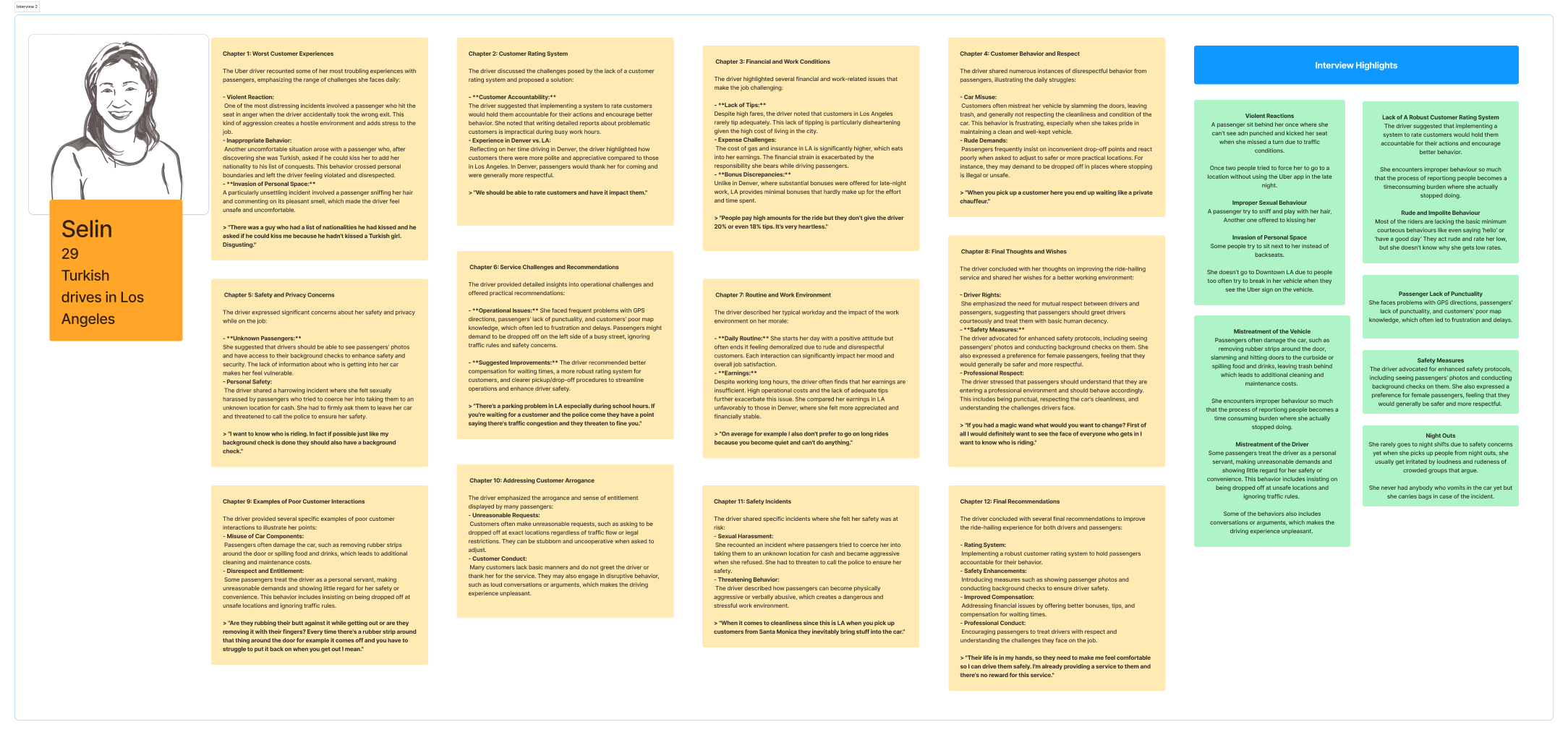
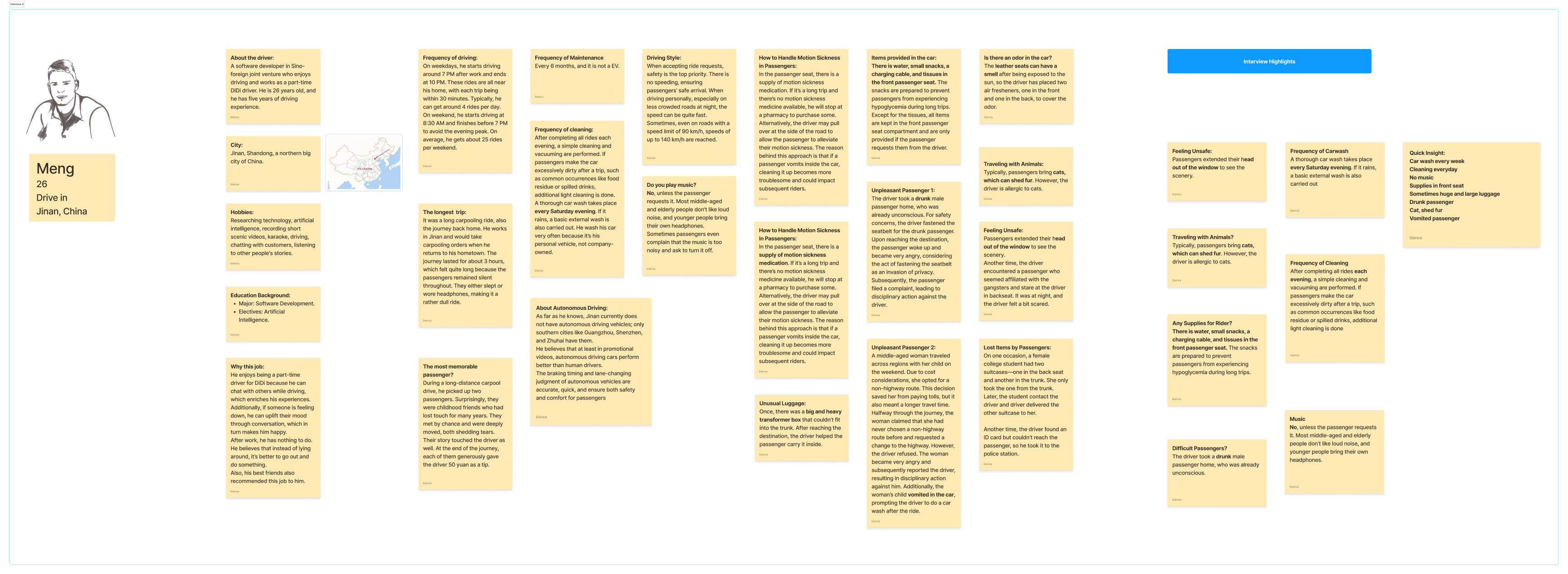
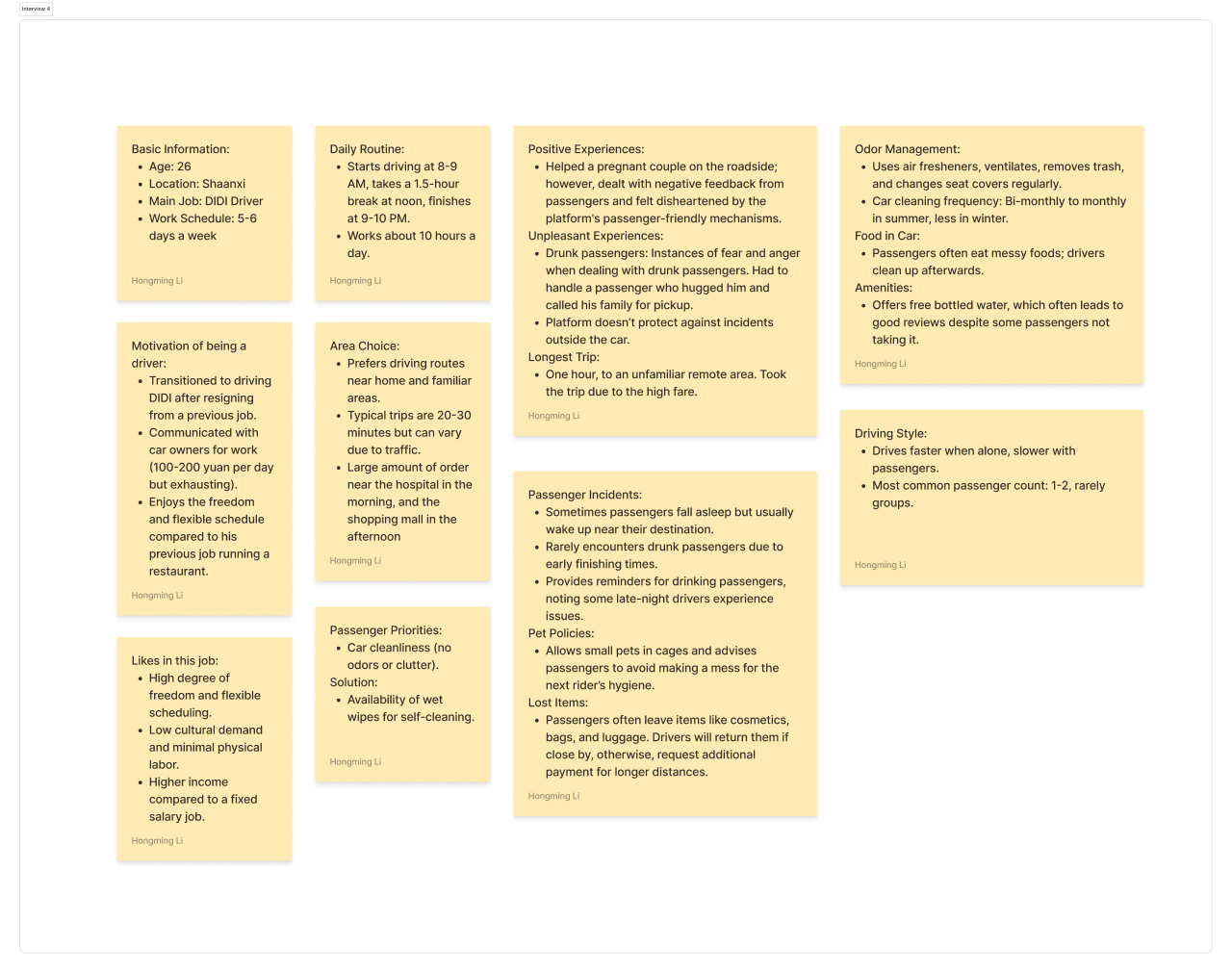
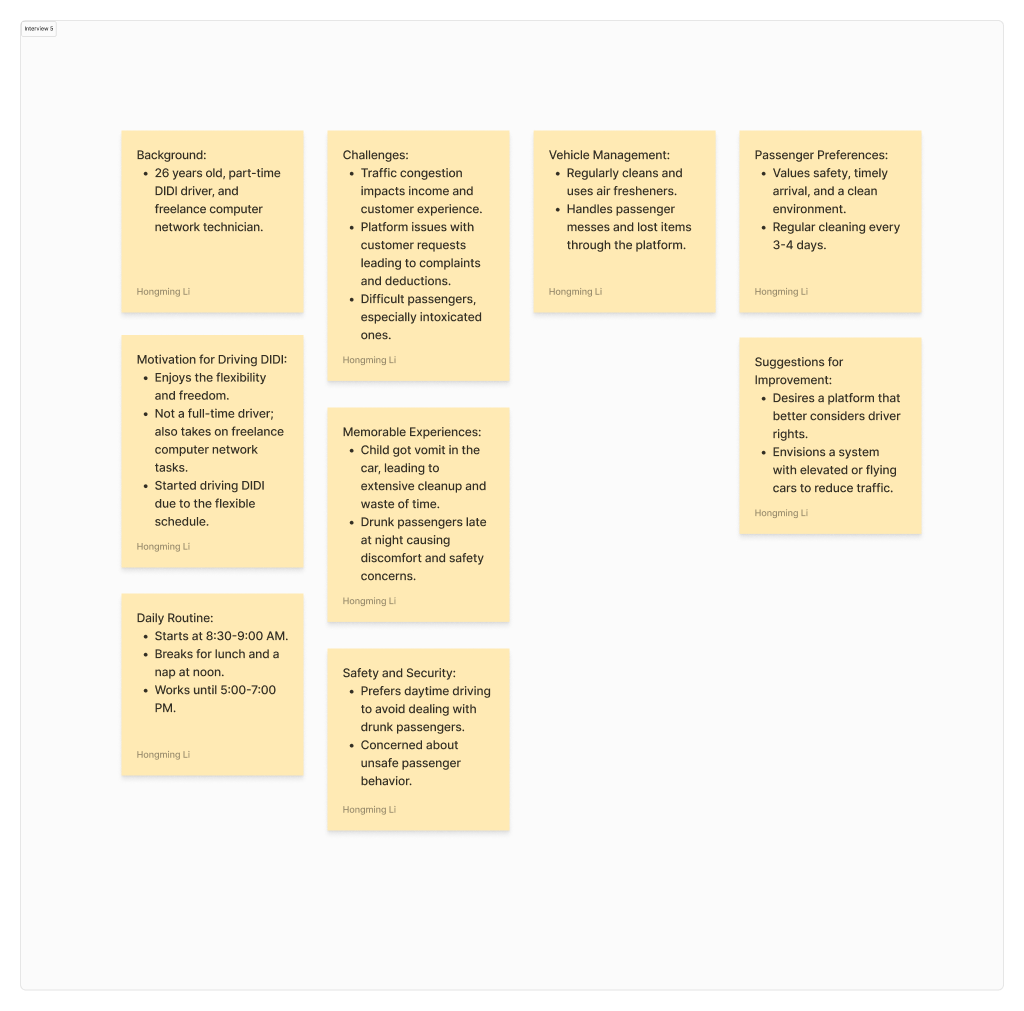
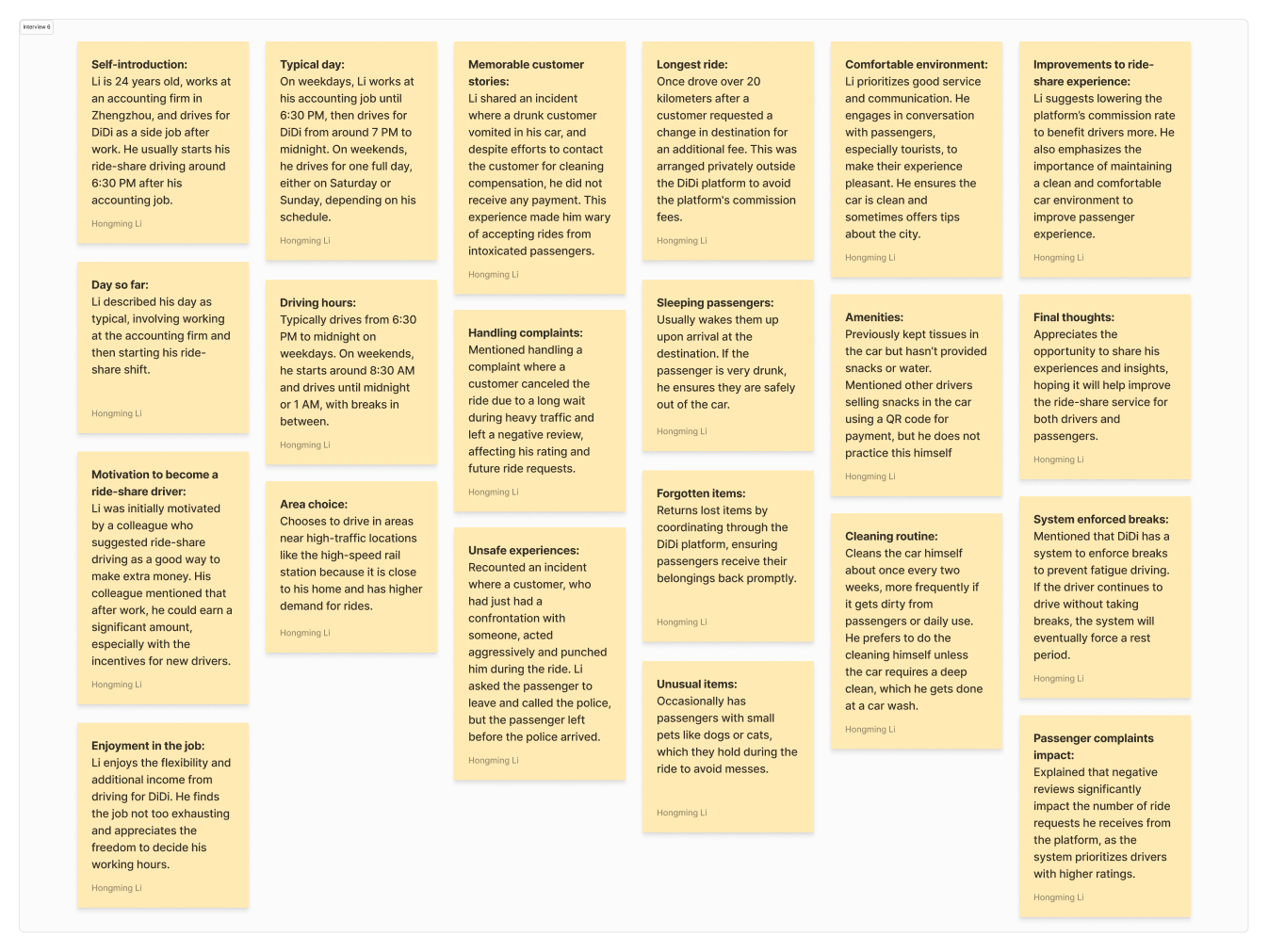
Primary Research
Insights Cluster
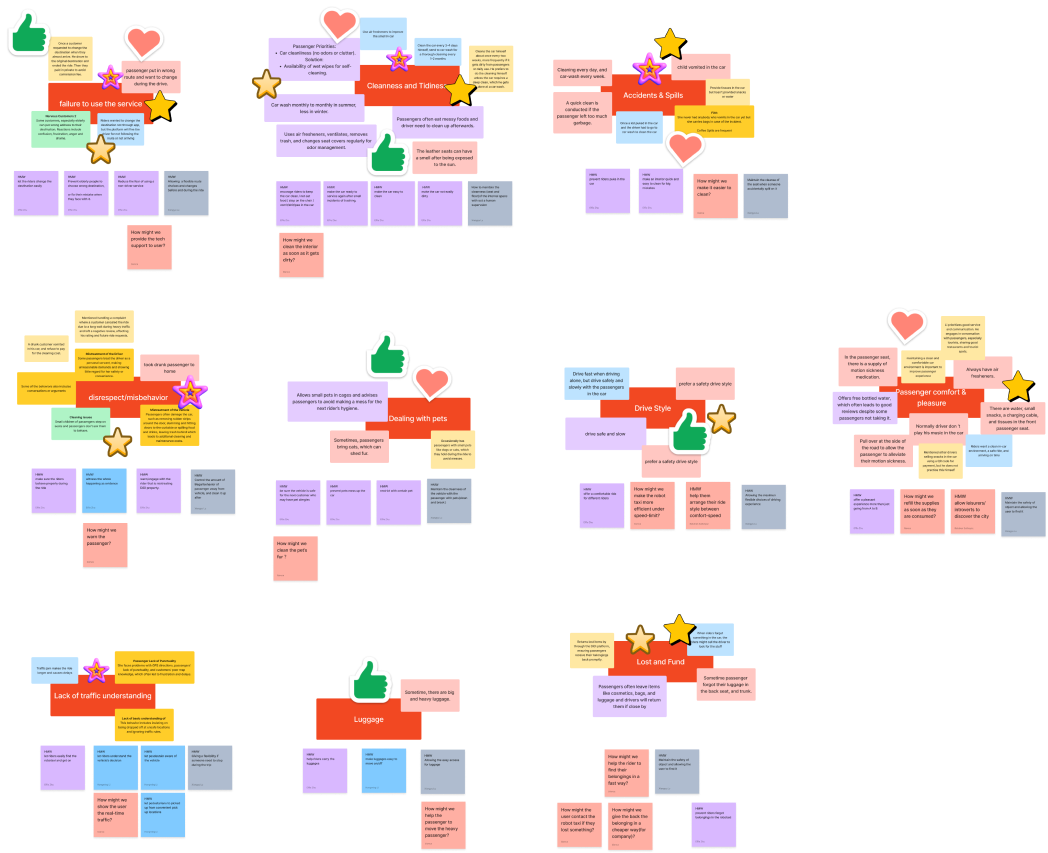
Ideation Cluster
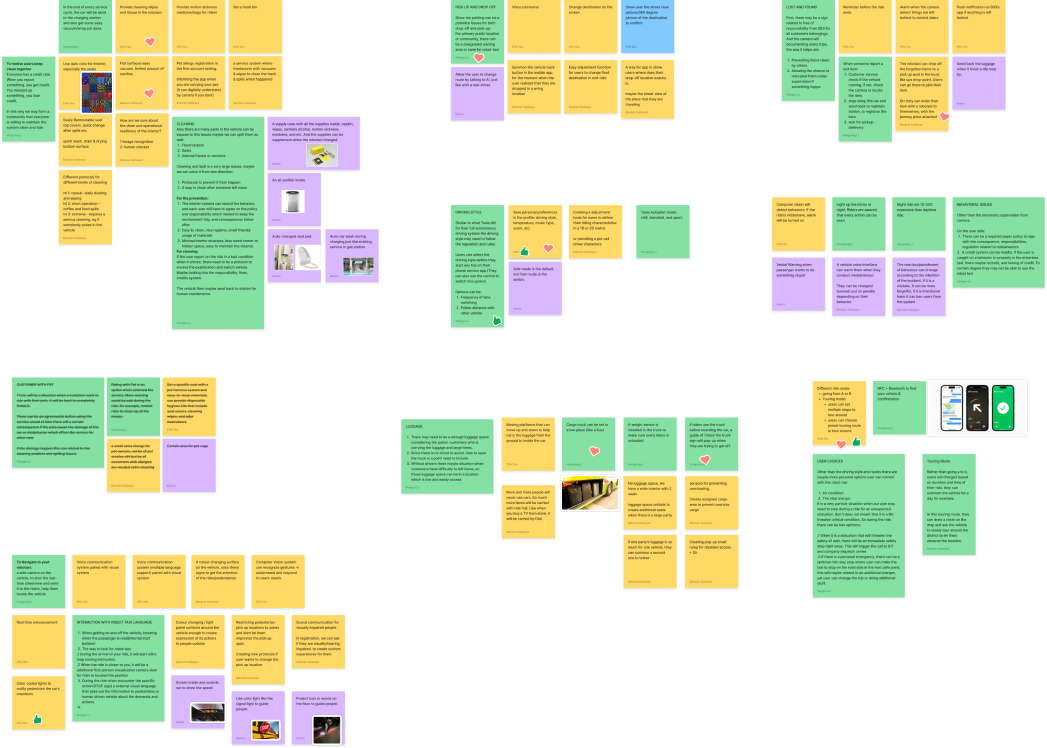
HMW Cluster
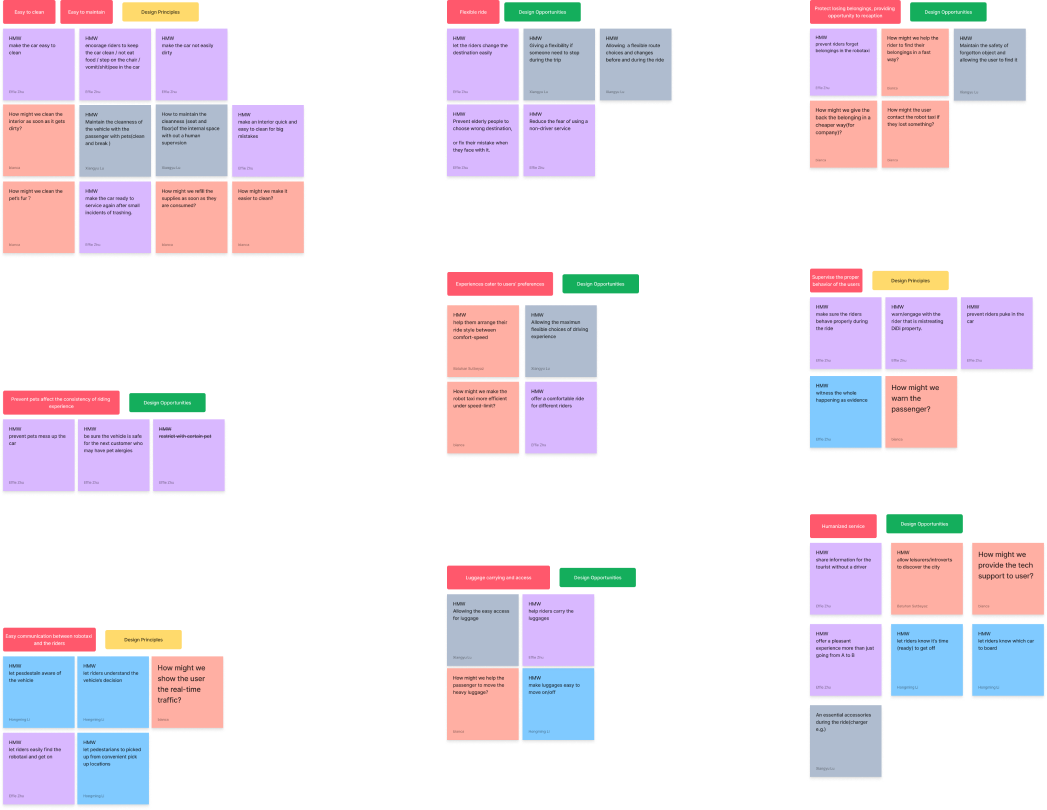
/ User Interview
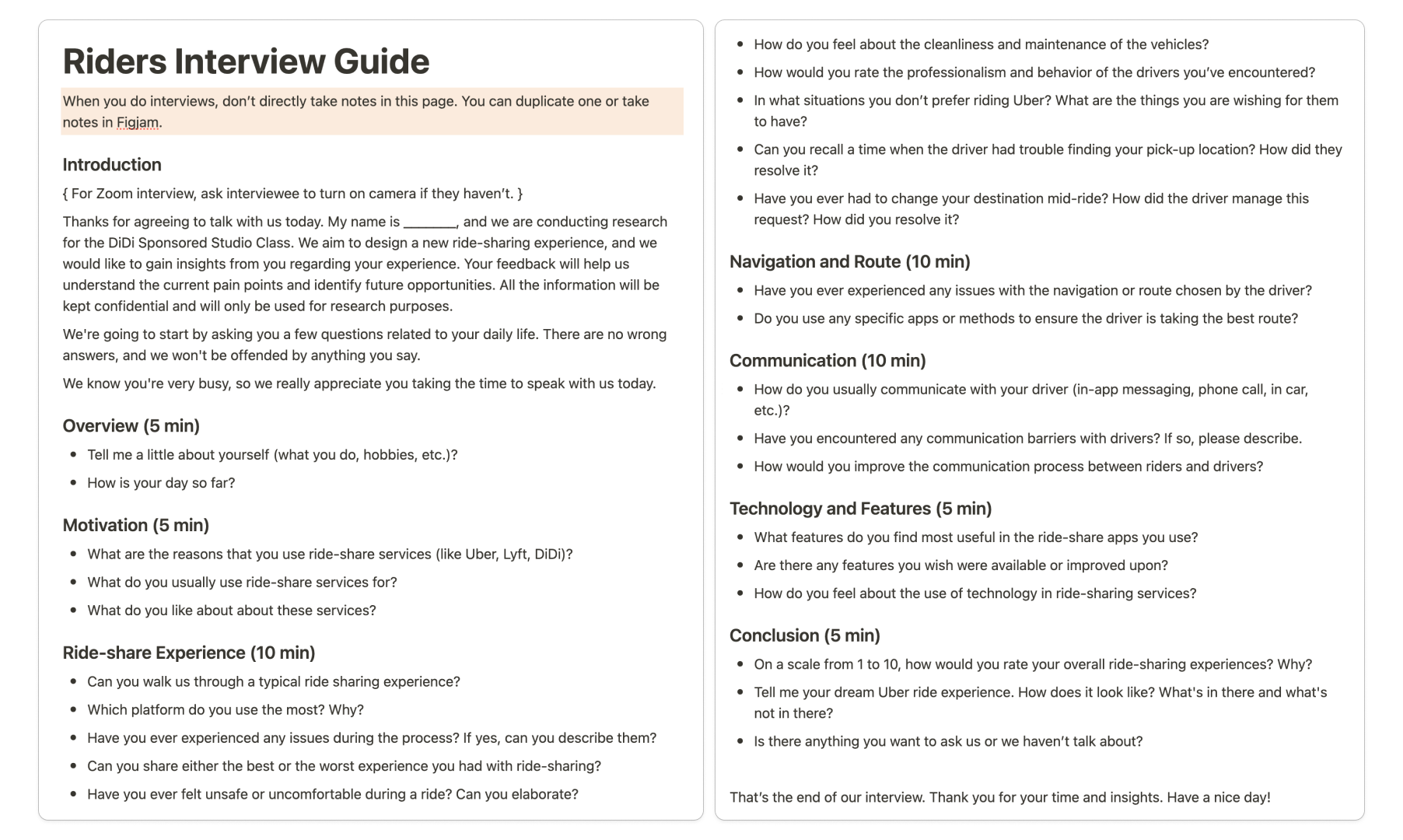
Design Objective
Problem Statement
How can we reconstruct the ride-hailing experience without drivers?
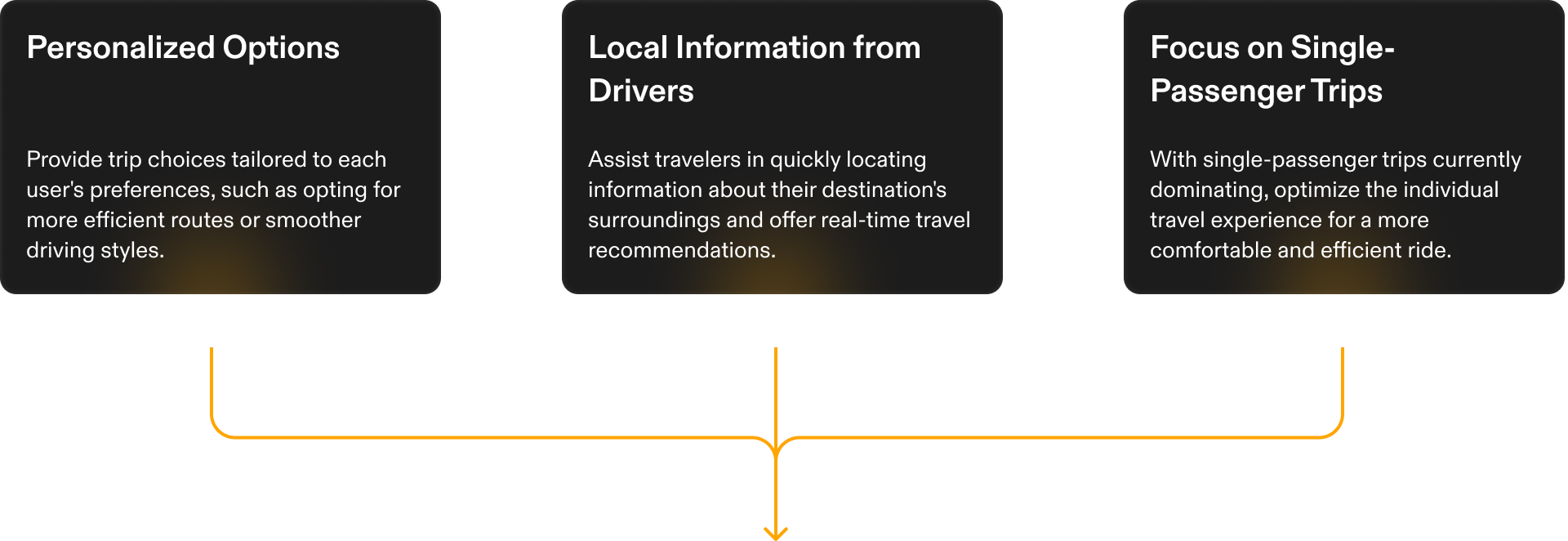
How can we reimagine mobility to deliver an intuitive experience that meets each user's personalized needs and enriched local insights?
Problems of San Francisco
Secondary Research
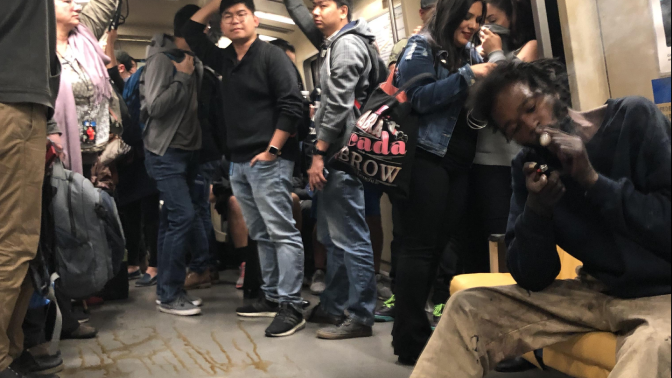
Limited Public Transportation Coverage
Public transit has restricted service areas and limited operating hours, failing to meet commuter demands.
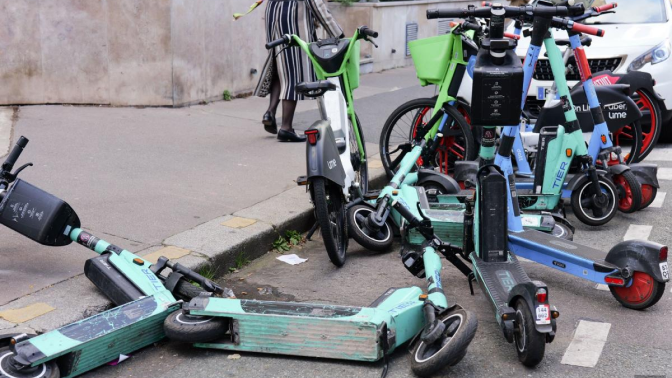
Insufficient Last-Mile Solutions
There's a gap between transit hubs and final destinations, making travel inconvenient.
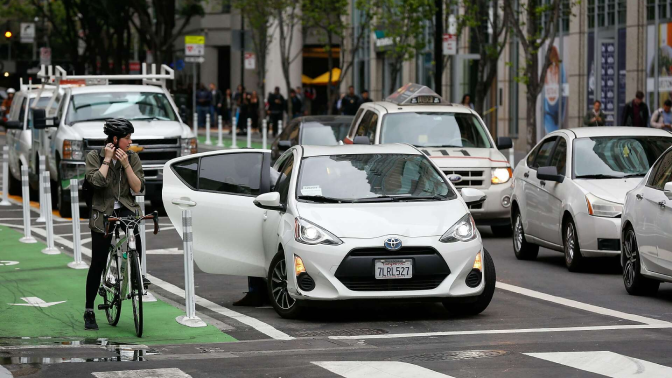
High Ridesharing Costs
Ridesharing fares start at $15+, with San Francisco and San Jose ranking #3 and #5 among the most expensive cities in the U.S. for transportation.
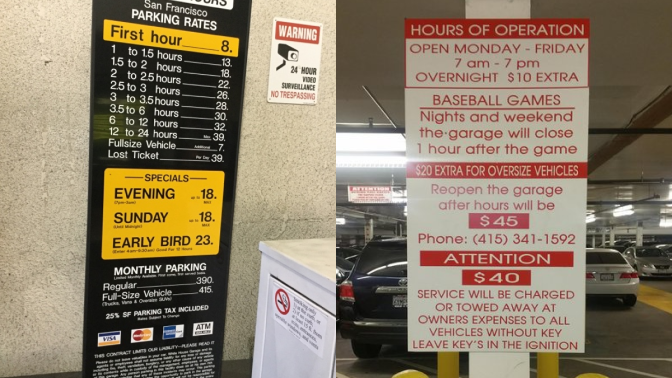
High Cost of Car Ownership
San Francisco residents face an annual parking fee of $2801 and an average gas price of $4.97, creating significant financial pressure.
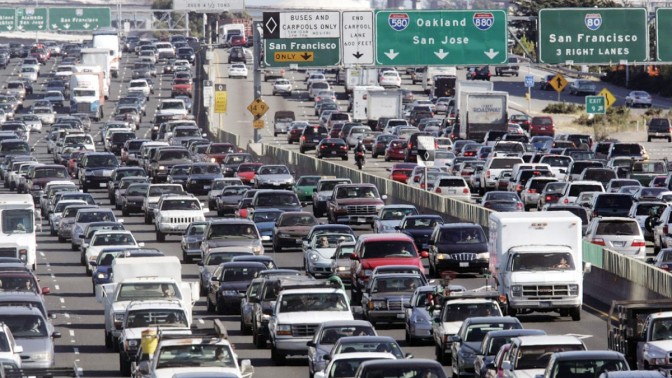
Growing Commute Demands
120,000 commuters enter the Bay Area daily; 33% commute 15-29 minutes, and 24% commute 30-44 minutes.
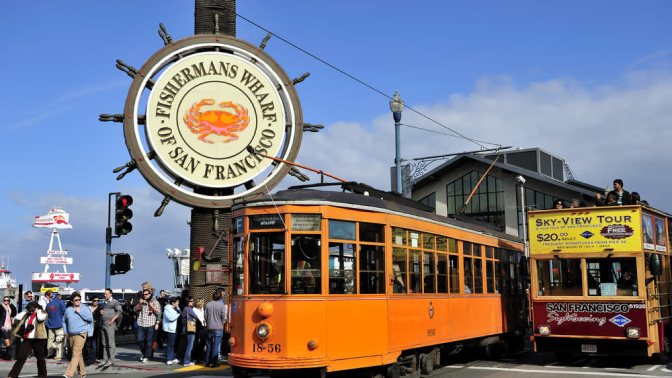
Massive Tourist Influx
As a top tourist destination, San Francisco attracts over 21 million visitors annually, increasing the strain on transportation systems.
/ Competitive Analysis
Rideshare (Uber & Lyft)
- On-demand usage flexibility to request rides anytime.
- Ability to communicate directly with drivers to meet specific needs.
- High cost, making it expensive for regular use.
- Long wait times during peak hours.
- Rider experience varies, depending heavily on the driver.
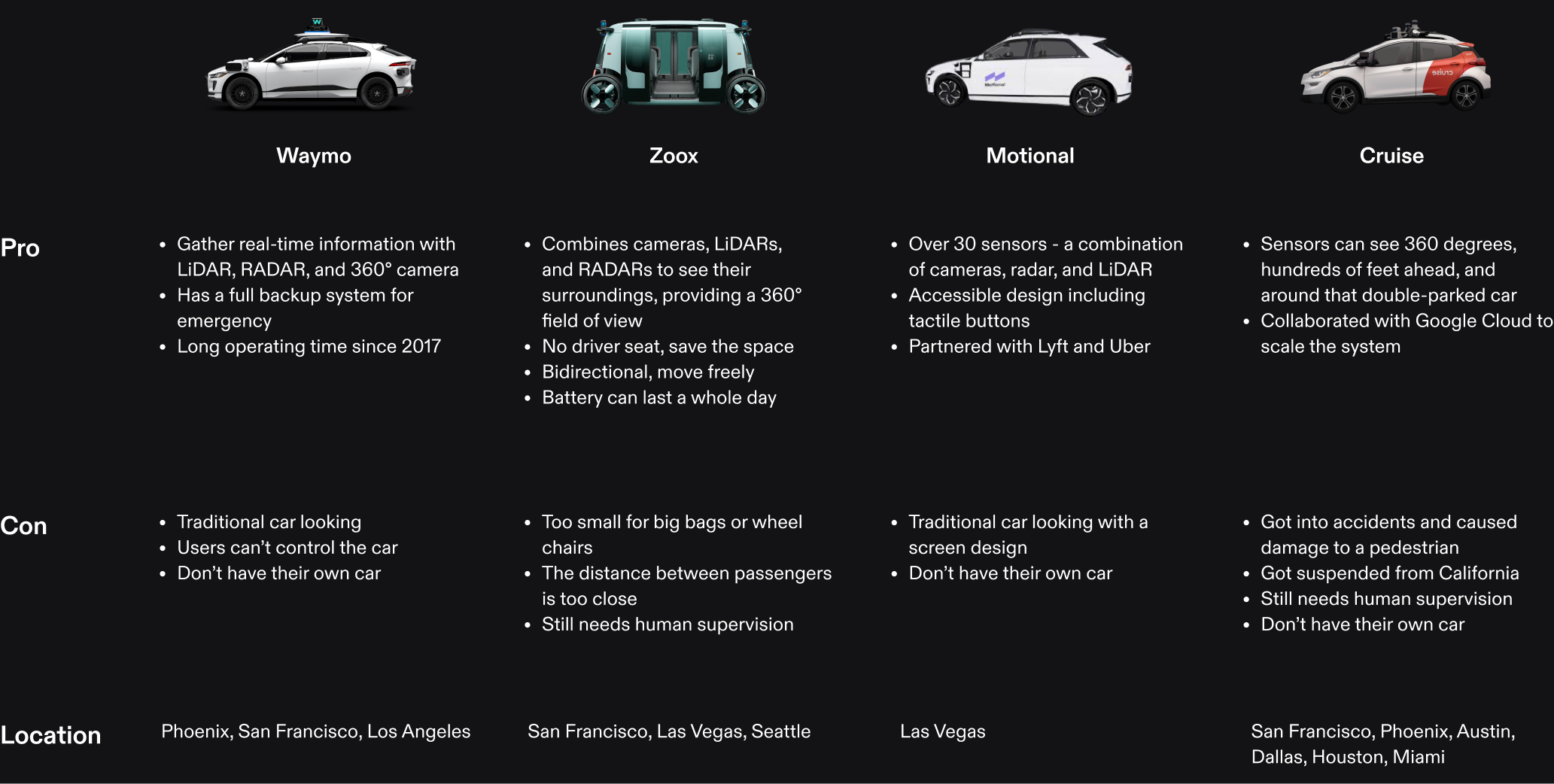
Autonomous Ride (Zoox & Waymo)
- Consistent and unified rider experience.
- Strong focus on safety and privacy.
- Extremely expensive, limiting accessibility for most users.
- No immediate help available from attendants or drivers.
- Limited coverage areas, reducing convenience for broader usage.

Public Transportation (SFMTA)
- Low cost, making it highly affordable for most commuters.
- Covers a relatively large operational area.
- Unreliable schedules, often causing delays.
- Falls short on safety and hygiene standards.
- No privacy, leading to a less comfortable experience.

Exterior
Design
Sleek & Air Dynamic Efficiency Design
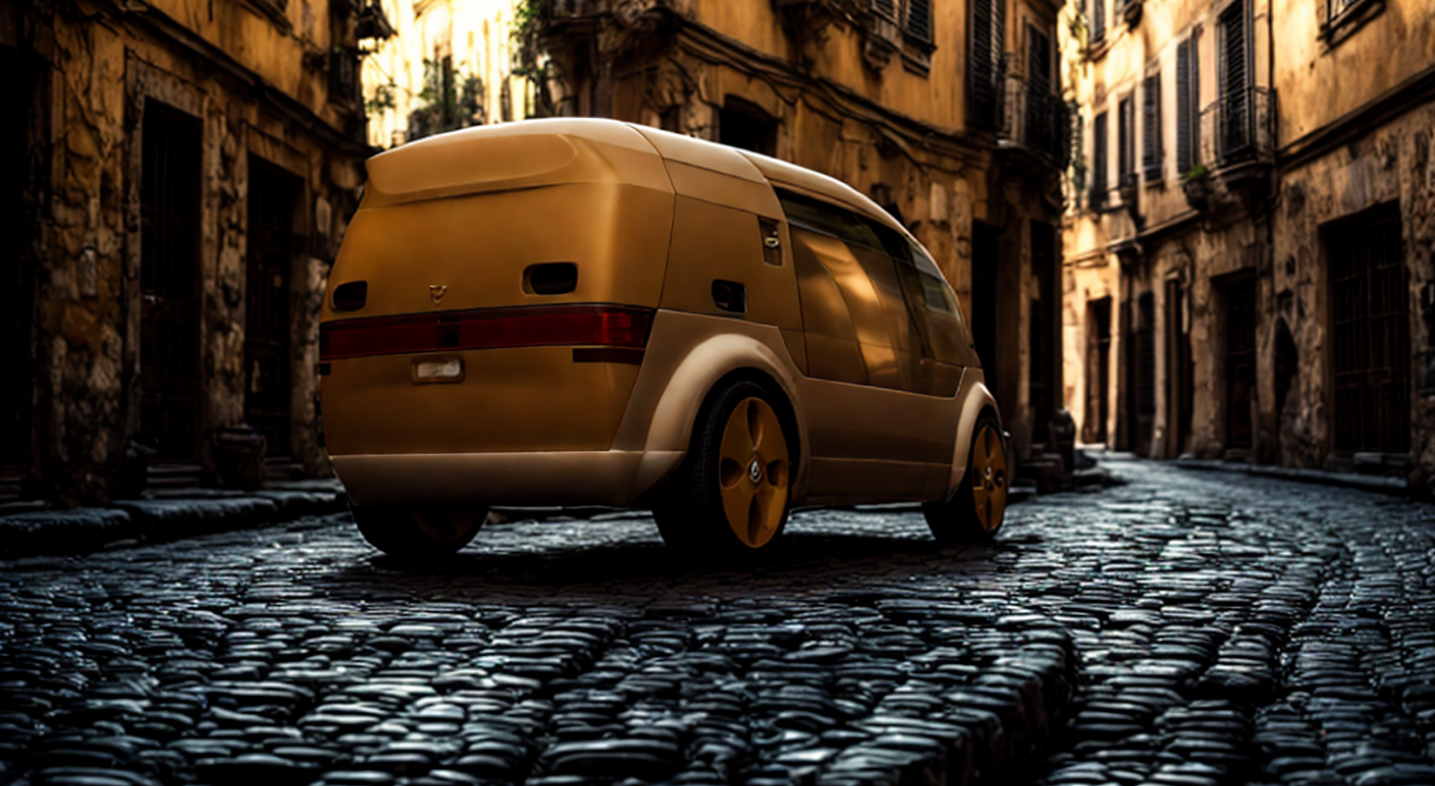
The narrow vehicle body design allows for easier maneuvering through traffic during peak hours and enables access to more restricted or enclosed roads. The streamlined exterior design reduces air resistance while driving.
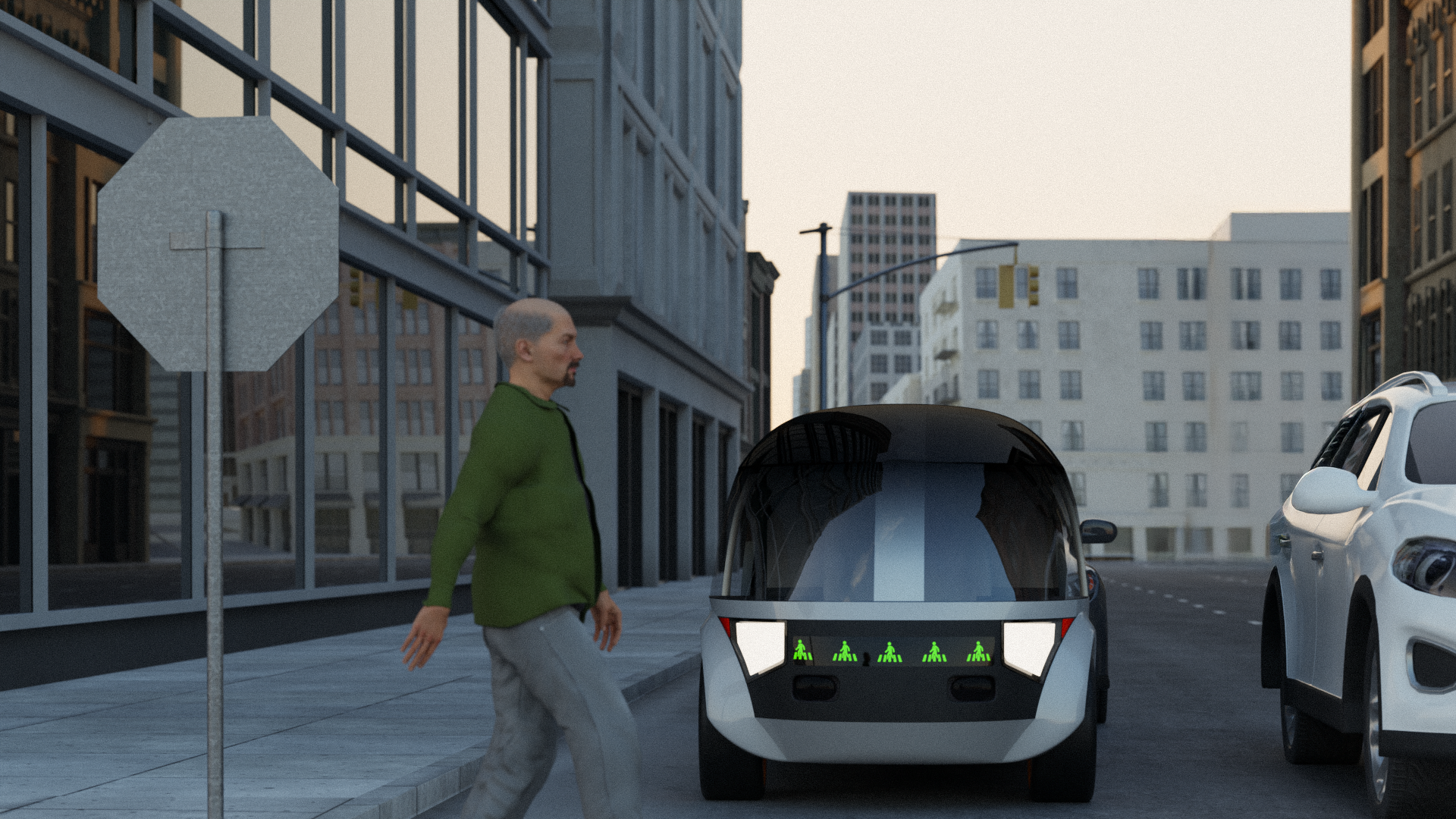
External Communication (eHMI)
Human drivers communicate intentions to those around them through gestures like waving or nodding. In our design, we implemented an LED screen to convey safety information to pedestrians and nearby vehicles.
/ Interior Layout
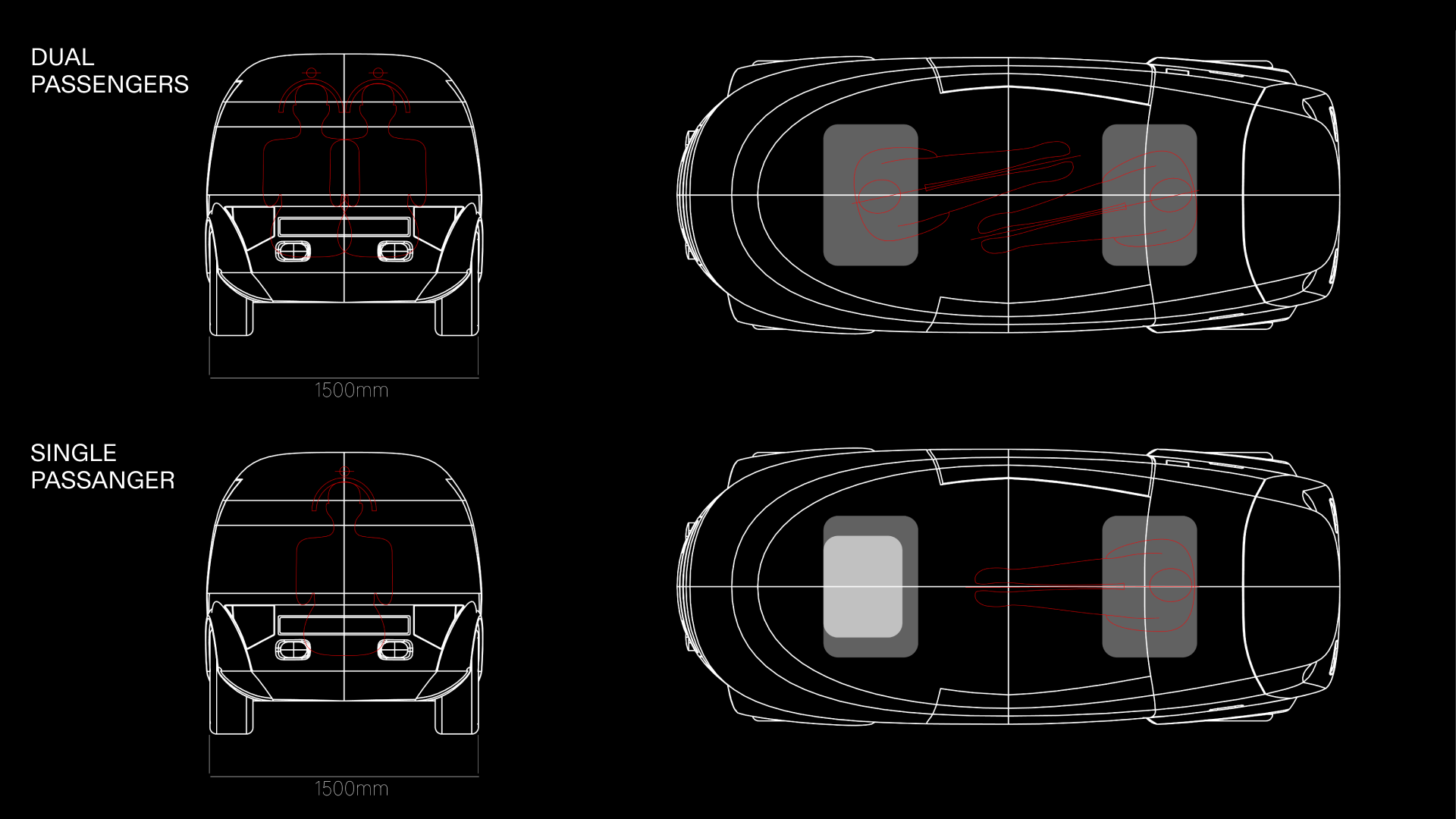
According to rideshare market data, the vast majority of trips involve fewer than two passengers, with most being solo travelers.
Therefore, we have specifically designed the cabin layout to provide a first-class experience for single passengers. For trips with two passengers, the layout is optimized to enhance their ability to converse comfortably.
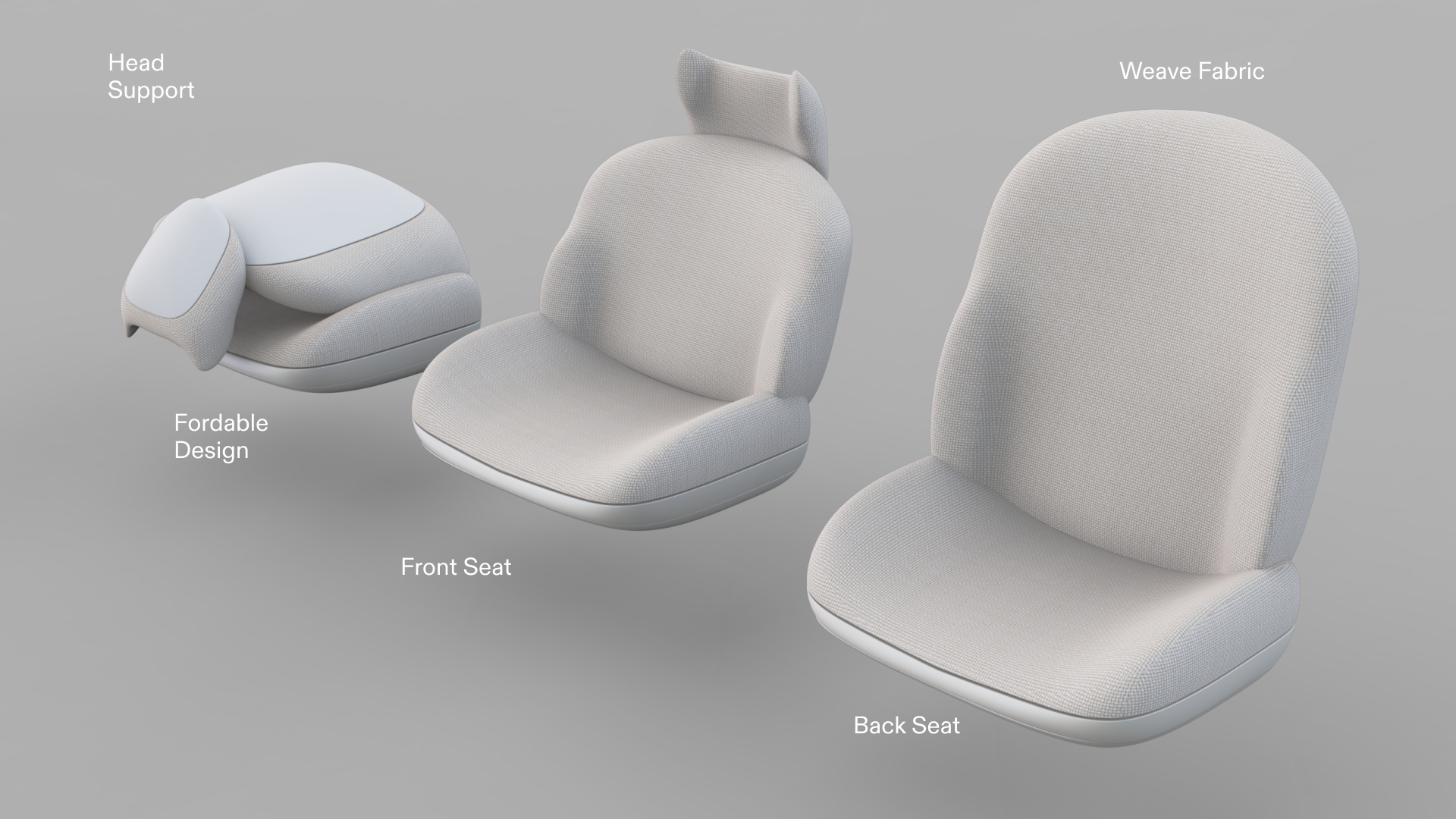
Dynamic Seat Layout
Most rideshare trips involve solo travelers. Our cabin design offers a first-class experience for individuals and optimizes comfort for conversations when traveling in pairs.
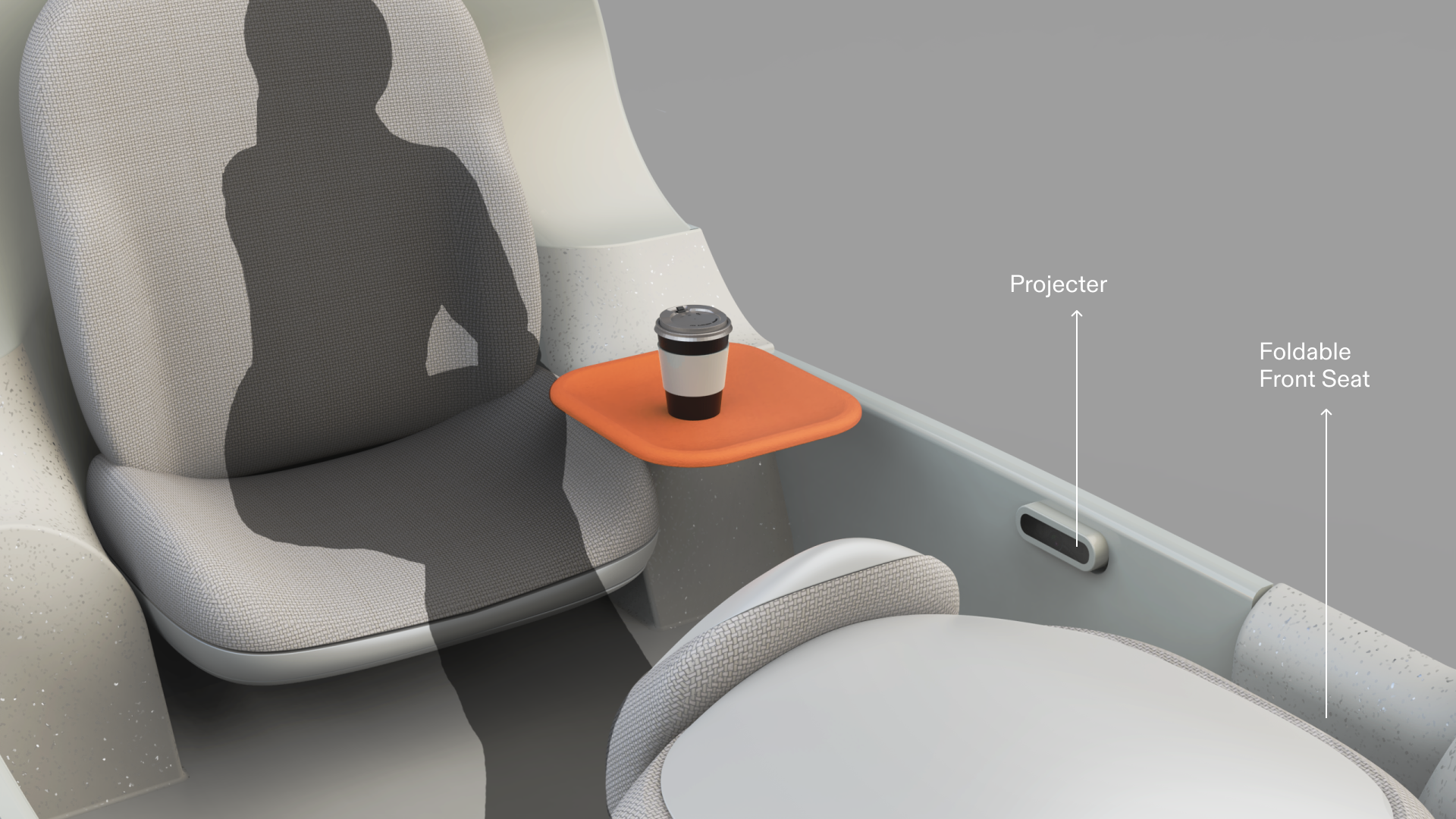
Fold with needs
When traveling alone, the front seat folds away to provide an optimal view. For two-person trips, both seats are ready upon the vehicle's arrival.
/ Interaction
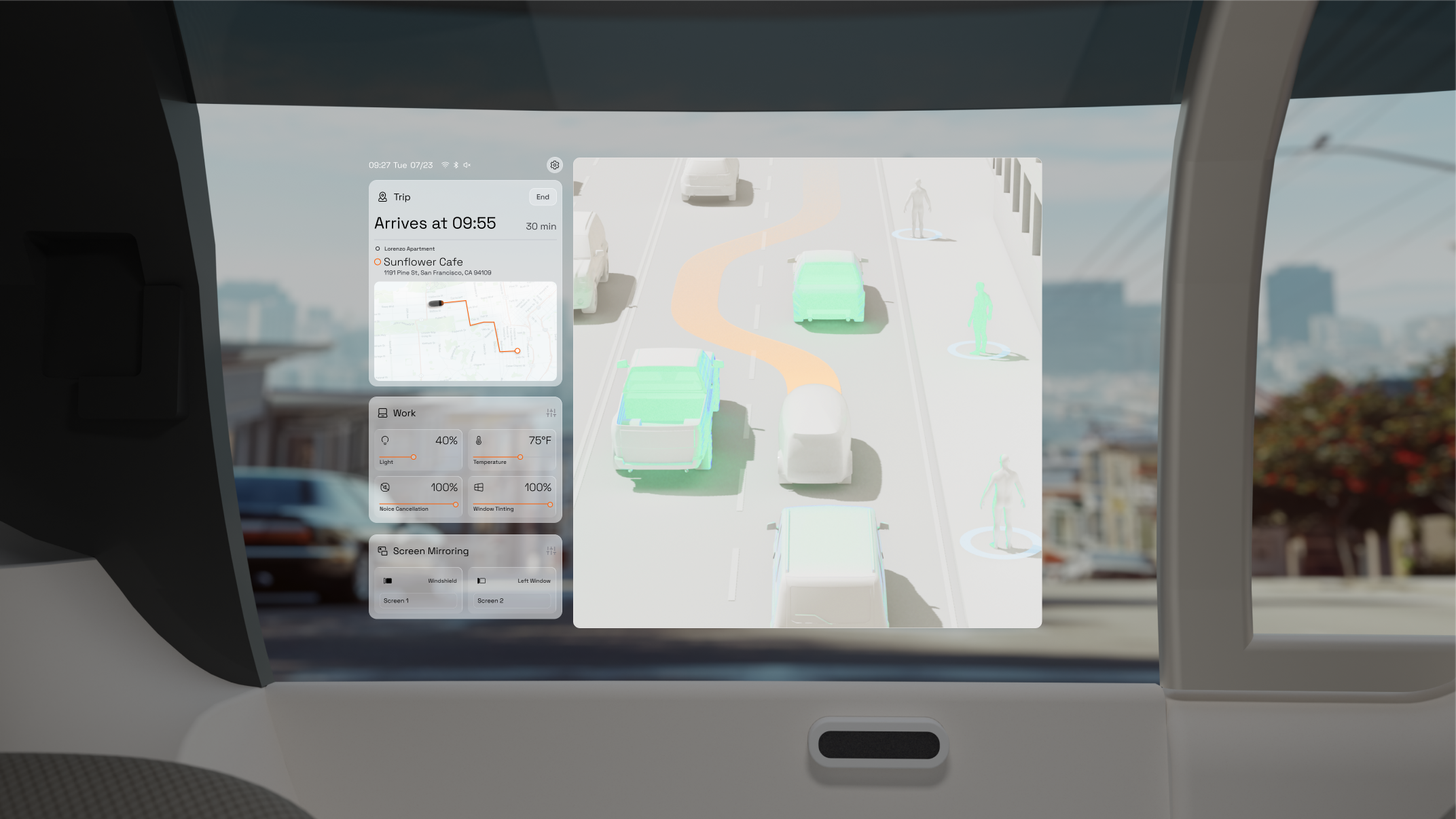
Smart Glass Interaction Interface
The adjustable transparency glass display allows seamless switching between city navigation information and an immersive street view experience, enhancing transparency and safety in Robotaxi travel.
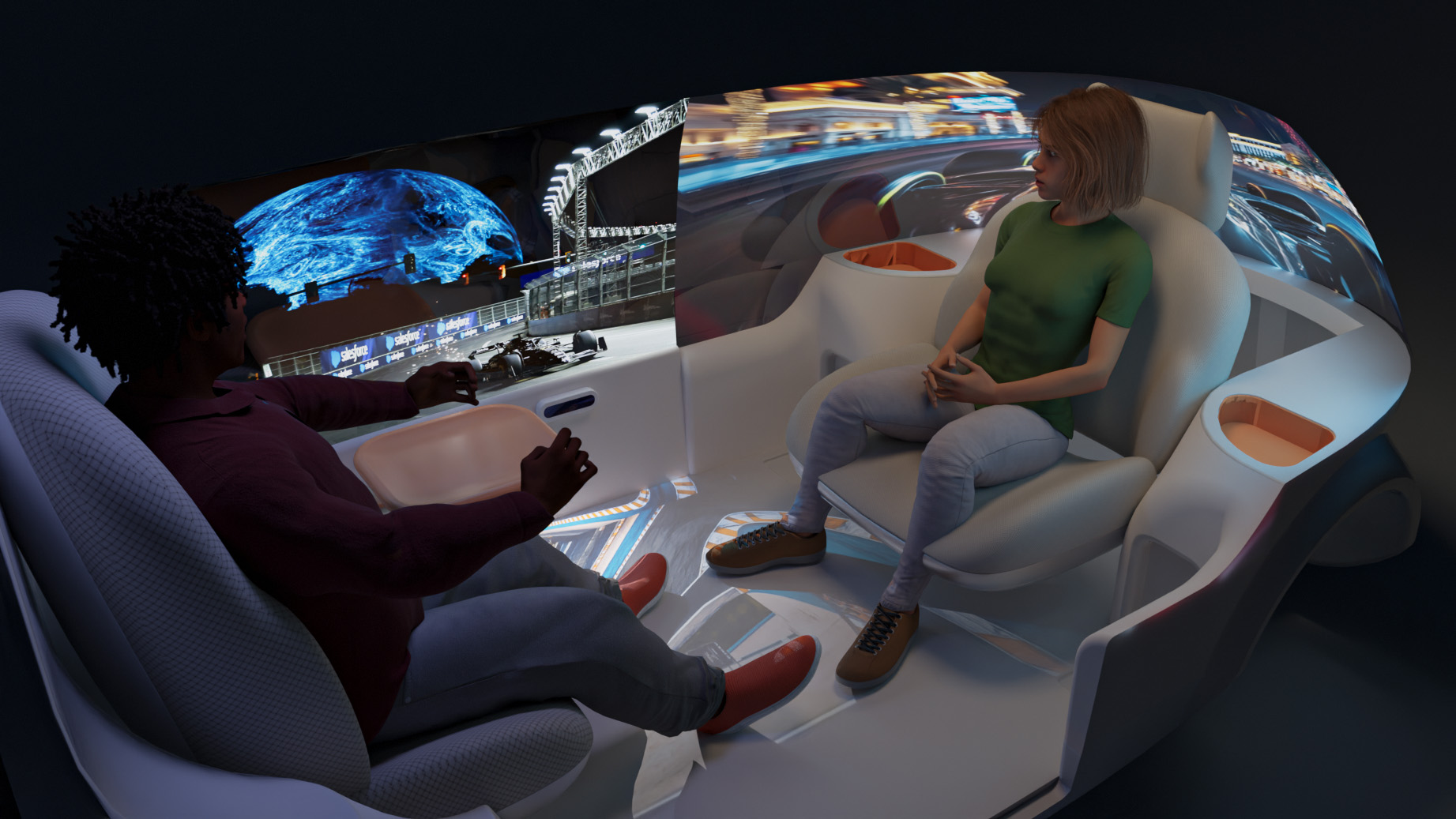
Immersive Panoramic Entertainment Cabin
The panoramic projection creates an immersive city narrative experience and high-quality media entertainment, transforming the Robotaxi into more than just transportation, it's a dynamic experience space.
Intelligent Behavior Recognition & Demand Prediction
We have introduced an intelligent demand prediction feature based on user behavior, allowing the cabin to automatically adapt to different passenger states. For example, when a passenger sits upright using a device, the system recognizes work mode and optimizes lighting and workspace. If the passenger reclines or closes their eyes, it shifts to rest mode by dimming lights and reducing noise. All data is processed locally with reduced detection frequency, ensuring privacy while delivering a seamless smart experience.